


Using Sparx EA for Diagrams? Check What Your Models Can Answer
Your architecture diagram is on screen. Everyone can see the applications and their connections. Then someone asks: “If we change this system, who else needs to know?”
Can you answer from the model, or does the meeting pause while someone checks another document?
That is a useful question to ask about your Sparx Systems Enterprise Architect diagrams. The opportunity to get more from them begins with the information your team needs next.
Start with a diagram your team already uses
Consider a simple example: a customer portal sends orders to an order management system, which exchanges information with a delivery service.
A diagram can explain that arrangement clearly. A project team might use it to discuss an integration; a manager might use it to understand the services involved.
Now consider what happens when the order management system changes. The diagram becomes a starting point for questions about interfaces, other consumers and responsibility for the update.
Sparx Enterprise Architect can represent those connections in the underlying model. Whether your team can use them depends on what has been modelled and how easily people can find it.
Get More From Your Sparx EA Models
Explore how your current models, repository structure and modelling practices can better support traceability, reuse and architecture governance.
Three questions to ask about the information behind the diagram
1. Where else is this system used?
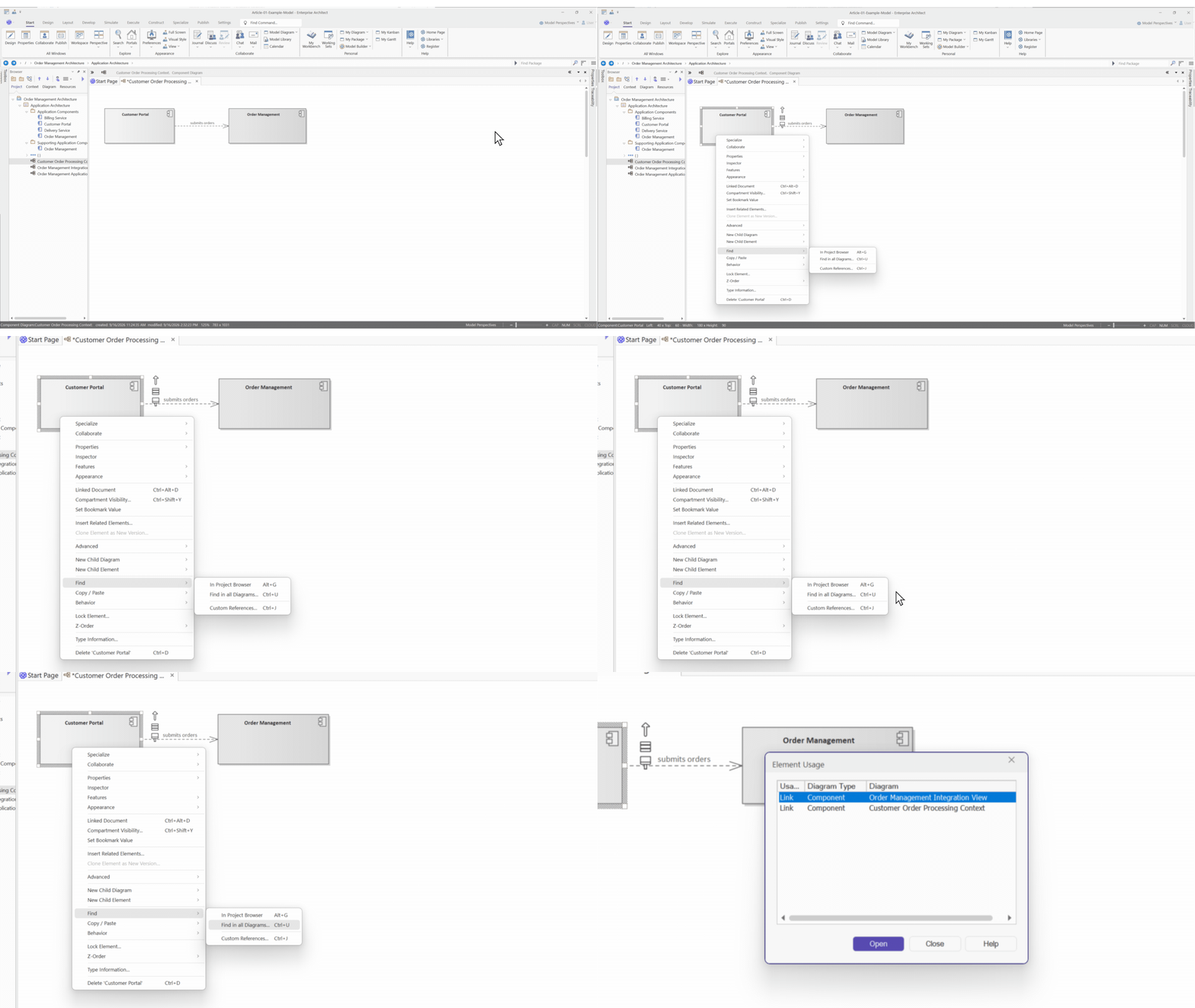
The same system may appear in an integration view, a deployment view and a project-specific diagram.
Model element reuse helps those views refer to the same underlying item. Separate copies with similar names can leave readers uncertain about which item represents the system they mean.
In a Sparx EA model repository, check the identity of the element as well as its label. When someone updates its information, are they updating the shared item or one of several independent versions?
This is a practical issue for connected models.
2. What depends on it?
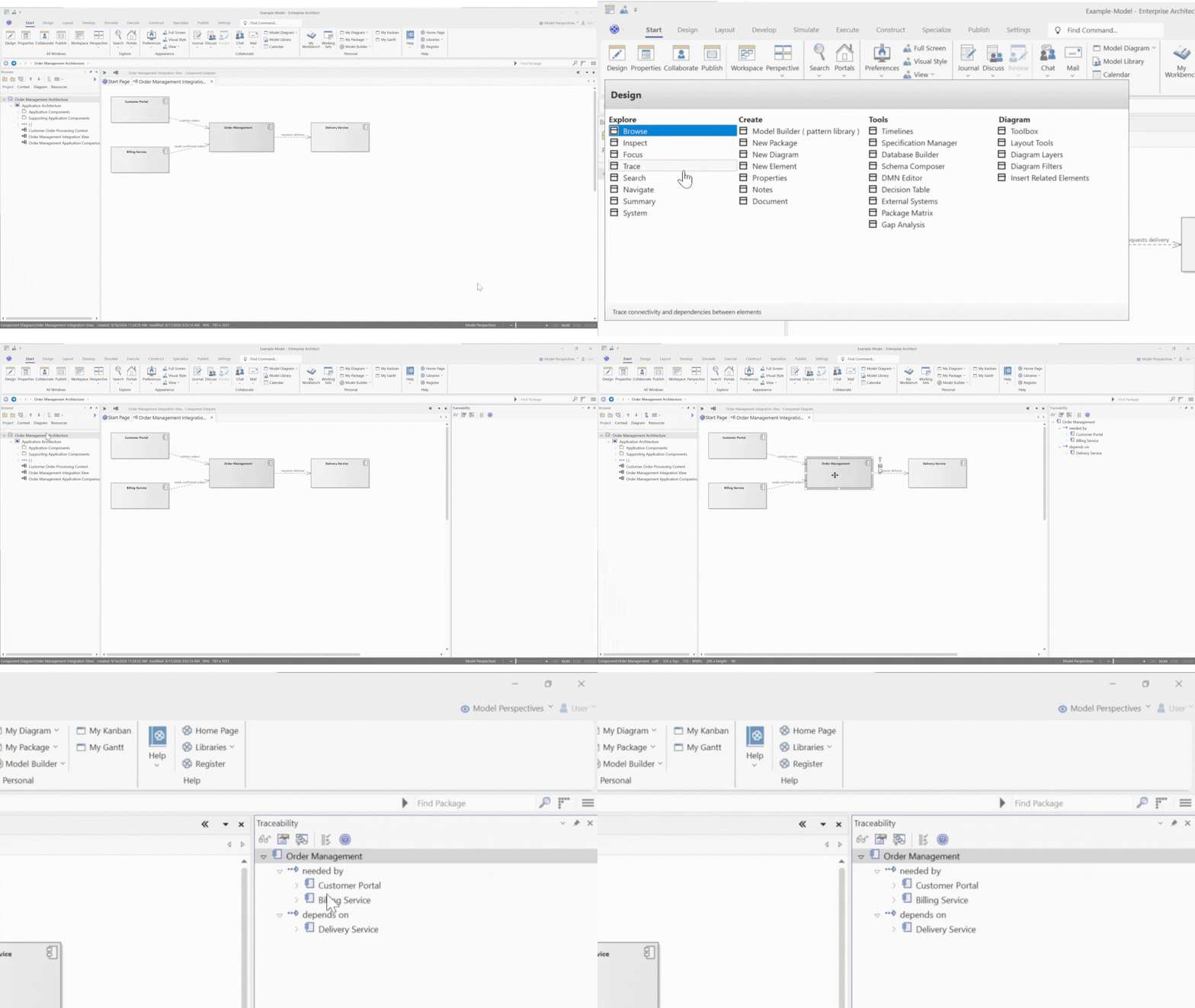
A diagram may deliberately show only part of the architecture. That makes it readable, but the visible lines may not tell the whole story.
EA’s Traceability window and Relationship Matrix provide ways to examine model connections. They can help you explore beyond a particular view.
They still depend on the relationships in your architecture model. An interface that has never been recorded cannot be treated as checked simply because it does not appear in the results.
Useful diagram traceability therefore includes a second question: what might be missing from this answer?
Strengthen Your Sparx Enterprise Architect Skills
Build practical skills in model reuse, traceability, repository navigation and governance through focused Enterprise Architect training.
3.Who owns the next update?
Finding a dependency is only part of the work. Someone must confirm its meaning and keep the information current.
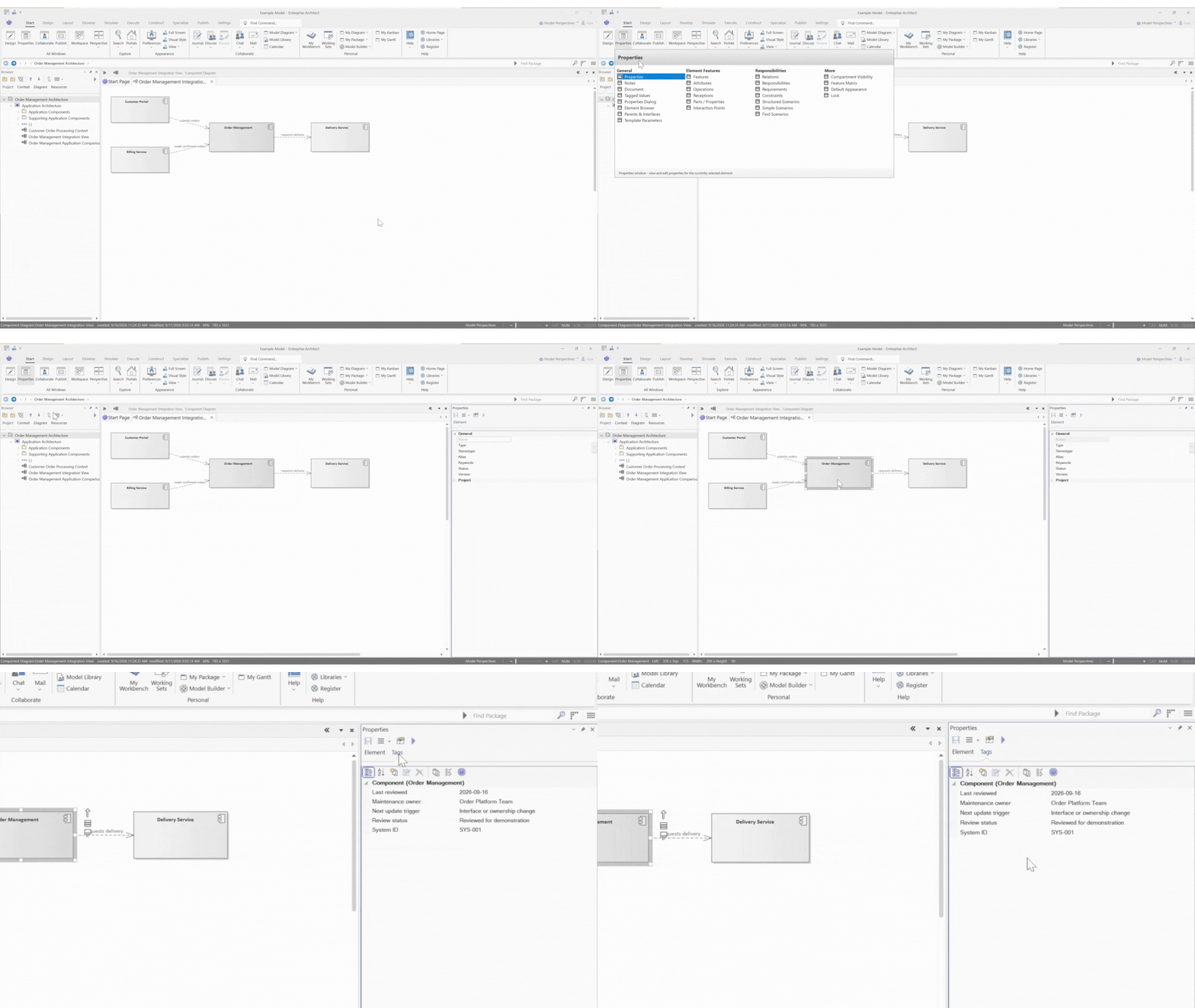
Can a colleague identify:
Who maintains the system information?
Whether it describes the current arrangement or a proposal?
When it was last reviewed?
Who should confirm a suspected gap?
Agree how your team records these details. Consistent ownership and status information give readers a route to resolve uncertainty.
Extend the value of the view
Use one familiar diagram to decide where the next improvement belongs.
What happens today | What to examine |
The same system is recreated in several diagrams | Shared element identity and reuse |
Dependencies are checked by asking around | Recorded relationships and their coverage |
Only the original author can find related information | Model navigation and reusable searches |
Nobody knows whether the information is current | Ownership, status and review practices |
Your Enterprise Architect diagrams do not need to show everything at once. A clear view can remain focused while giving readers a way to investigate further.
Choose one question to improve first
Bring a diagram to your next team discussion and choose a question that comes up repeatedly. Ask a colleague to answer it using the model.
Notice where they get stuck. Is information missing? Is the right element difficult to find? Does the answer need confirmation from an owner?
That observation gives you a specific improvement to work on—and a way to check whether it helped.
Want to explore what more your diagrams could support?
Talk to Sparx Systems Malaysia about one model and one question your team needs to answer.